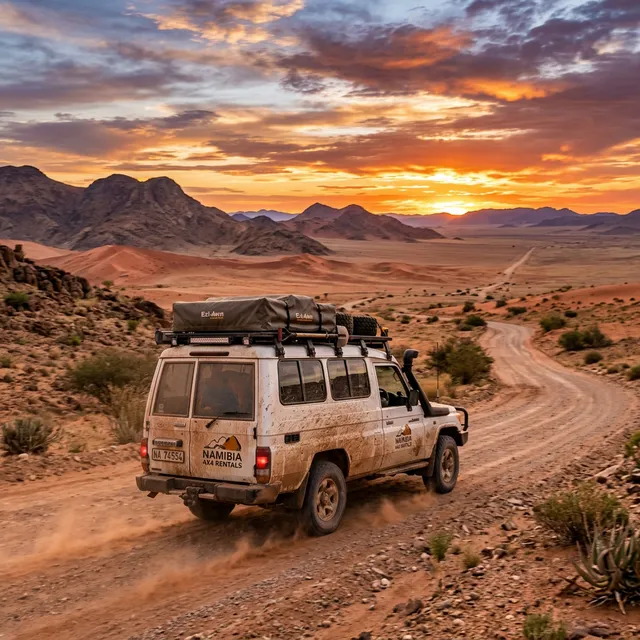
A Namibia self-drive holiday offers freedom, but it works best when the route, vehicle and daily pace are planned together. This guide does not replace the rules of your rental contract or live road advice. Confirm the route with the rental company, follow its vehicle-specific instructions and check official updates before each remote section.
Choose the vehicle for the route
Start with the roads you genuinely intend to use. A standard car may suit a town-based or tar-road itinerary, while higher clearance can improve comfort and confidence on long gravel sections. Four-wheel drive becomes relevant for routes involving deep sand, rough access tracks or places where a concession or accommodation specifically requires it. A 4x4 badge is not a substitute for training, route permission or careful judgment.
Group size, luggage, fuel range and tire setup matter as much as the drivetrain. Everyone should have a proper seat belt, and the vehicle must carry the people and bags without blocking visibility or making daily access difficult. If camping, confirm exactly what sleeping, recovery and cooking equipment is included rather than relying on a package name.
Route permission
Send the provider your planned overnight stops and border crossings. Get written confirmation that the route is permitted.
People & luggage
Choose enough cabin and cargo space for safe, comfortable travel during repeated long days.
Included equipment
Check spare wheels, jack, wheel tools, warning devices, compressor and provider emergency contacts during handover.
Questions to ask before booking a rental car
- Are all roads and destinations on my itinerary allowed under the contract?
- Which insurance option applies, and what are the exclusions for tires, glass, underbody, sand or water?
- How many spare wheels are supplied, and which tools are included?
- What must I do after a puncture, warning light, collision or mechanical problem?
- Where is breakdown support available, and what happens in a remote area?
- Are there mileage limits, after-hours fees or restricted border crossings?
- Which fuel does the vehicle use, and how is the tank level measured on return?
- What vehicle-specific gravel, tire and four-wheel-drive instructions will be given at handover?
Photograph the vehicle with the provider present, note existing damage on the official form and understand the dashboard controls before leaving. Practice changing between the functions you are authorized to use while staff can still answer questions.
Drive gravel roads conservatively
Gravel can change within a few kilometres. Corrugations, loose stones, soft edges, dips and patches of sand may follow a smooth-looking section. Slow down before a bend or crest, increase the following distance and avoid abrupt steering or braking. Dust can hide vehicles and road hazards, so do not sit close behind another car.
Use the rental company’s instructions for the specific vehicle and tires. Do not copy a universal tire-pressure number from social media; the correct setup depends on load, tire construction, speed, temperature, road and the provider’s policy. Stop in a safe place if the handling changes, a warning appears or a tire may be losing air.
Plan to avoid avoidable night driving. Animals, limited lighting, road edges and an unfamiliar vehicle make hazards harder to see, while assistance may be distant outside towns.
Plan fuel and water before remote stretches
Fuel stations are not evenly spaced, and a station can be closed, offline or temporarily out of a particular fuel. Ask local hosts about the next dependable stop and refuel with a useful margin instead of waiting for the warning light. If carrying approved extra fuel, use only the equipment and method permitted by the rental provider.
Carry more drinking water than the expected day requires, especially in hot weather or on quiet routes. Keep some water and essential medication accessible inside the cabin rather than under all the luggage. Food, sun protection, warm layers and a basic personal first-aid kit help turn a delay into an inconvenience instead of an emergency.
Build realistic daily driving plans
A Namibia road trip is not measured well by distance alone. Gravel roads, scenery stops, fuel, gates and changing conditions can expand the day. Treat generic map times as a starting estimate and ask your hosts or rental provider about realistic current travel time. A shorter route with two-night stays is usually more rewarding than changing beds every evening.
- Begin the day rested and avoid a long transfer directly after an overnight flight.
- Choose a daylight arrival target and work backward from it.
- Add time for fuel, food, photographs and unplanned slow sections.
- Avoid combining a major dawn activity with an exhausting transfer afterward.
- Use the 7, 10 and 14-day itinerary guide to reduce backtracking.
Prepare for punctures and delays
During handover, ask staff to show where the jack, wheel tools, spare wheels and warning equipment are stored. Confirm who may change a wheel and which number to call first. Save the rental provider’s emergency contact offline and keep the contract details available.
If a problem occurs, stop as safely as conditions allow, make the vehicle visible and contact the rental company for instructions. Do not leave a known route or attempt a repair outside your skills and authorization. In a remote area, staying with the vehicle can make you easier to locate, but always follow the provider and emergency-service guidance for the actual situation.
Before departure, review current information from the Roads Authority Namibia. Ask the next accommodation about recent local conditions, particularly after rain, and respect closures or route changes.
Book the car after the route makes sense
Sketch your overnight sequence first, including arrival and departure buffers. Then compare vehicles that are permitted and suitable for those roads. A clear route lets the provider give useful advice and prevents paying for capability you do not need—or reserving a vehicle that excludes a key destination.
Browse Namibia car rentals and connect the choice to your saved trip. The broader Namibia travel guide covers seasons, entry checks, money, connectivity and health preparation around the road plan.
Namibia self-drive FAQ
Do I need a 4x4 to self-drive in Namibia?
Not every Namibia route requires a 4x4. The right vehicle depends on the confirmed roads, season, luggage and rental conditions. Ask the provider to approve your exact itinerary before booking.
Is self-driving in Namibia safe?
Many visitors travel Namibia by road, but safety depends on conservative driving, daylight arrival, vehicle preparation, rest, water and a realistic route. Follow current official and rental-company advice.
Should I drive at night in Namibia?
Plan to avoid avoidable night driving. Animals, limited lighting, road edges and an unfamiliar vehicle make hazards harder to see, while assistance may be distant outside towns.
What should I ask a Namibia car-rental company?
Ask whether the route is permitted, what insurance excludes, how tire and glass damage is handled, which spare-wheel tools are supplied, where cross-border travel is allowed and how breakdown support works.
Connect the right car to the right route
Build a free Namibia itinerary, then compare local rental options that match the places you actually plan to visit.
Browse Namibia car rentals